Vistaprint Ai Logo Maker Honest Review — Is the Hype Justified?
My Unexpected Journey into AI Branding
I’ve always been someone who appreciates the intersection of classic hardware and modern software. For the last few years, I’ve been running a small electronics repair and custom circuit board shop from my garage. When I first started, I didn't care much about branding; I was more focused on soldering irons and oscilloscope readings. However, as my client base grew, I realized I needed a visual identity that didn't look like I had just typed my name in a generic font and called it a day. I’ve been using various design tools for months now, trying to find that perfect balance between professional polish and the "built-in-a-lab" feel that my electronics business represents.
A few months ago, the buzz around the Vistaprint AI Logo Maker started hitting my feeds. Being a tech enthusiast, I’m naturally skeptical of anything that slaps "AI" on the box as a marketing gimmick. I’ve seen enough "smart" devices that are really just basic sensors with a pretty interface. But since I already use Vistaprint for my business cards and component labels, I decided to give their artificial intelligence engine a serious, long-term test. I didn't just want a logo for a week; I wanted to see if this tool could actually understand the nuances of a technical field like electronics and provide something I’d be proud to put on my shop window.
After testing for over four months and iterating on several designs for different side projects, I’ve found some surprising truths about this platform. What I found was a tool that is remarkably capable in some areas and frustratingly rigid in others. In this review, I’m going to break down my honest experience, moving past the marketing hype to tell you what it’s actually like to live with a brand created by an algorithm.
First Impressions and the Onboarding Logic
When I first sat down to use the Vistaprint AI Logo Maker, I was looking for a specific workflow. I wanted to see if the AI could handle the "Electronics" niche without falling into the trap of just putting a blue lightbulb or a generic gear on everything. What I found was an onboarding process that felt more like an interview than a software setup. It asks for your business name, a slogan, and most importantly, your industry.
I was surprised by how much the "vibes" selection mattered. You're asked to pick between styles: modern, classic, elegant, or quirky. For my electronics repair shop, I gravitated toward "Modern" and "Professional." I noticed that the AI uses these keywords to narrow down its generative path. If I picked "Elegant," the results were thin-lined and airy—totally wrong for a high-voltage repair shop. If I picked "Modern," it leaned into bolder strokes and geometric shapes. This initial logic is the foundation of everything that follows, and I learned quickly that if you don't like the first batch of results, the problem usually lies in these initial "vibe" selections rather than the AI’s ability to draw.
The Generation Engine: Beyond the Surface
One thing that bothered me during the first hour of use was the repetition. Initially, it felt like it was cycling through a library of pre-made icons. But as I dug deeper and used the "Refresh" and "More Ideas" functions over several weeks for different projects, I realized the AI is doing something slightly more sophisticated. It’s not just picking an icon; it’s attempting to balance the visual weight of the icon with the typography of your specific business name.
In my experience, the AI excels at wordmark-heavy designs. If your business name is long—something like "Precision Micro-Circuitry and Hardware"—the AI tries to find a layout that doesn't feel cluttered. This is where it beats a human amateur using a standard graphics program. It understands margins and kerning in a way that feels "right" to the eye. I spent hours watching it adjust the spacing between my "C" and "I" to ensure the logo remained legible at small scales, which is vital when you're printing logos on 1-inch thermal labels for circuit components.
Customization: Where the Human Takes Over
After testing for a few months, the "honeymoon phase" with the AI generation ended, and I found myself spending more time in the editor. The Vistaprint AI Logo Maker isn't a "set it and forget it" tool if you want something truly unique. To get a result I actually liked for my shop, I had to dive into the manual adjustments. One thing I appreciated was the ability to swap icons within the same stylistic family. If the AI gave me a circuit board icon but the traces looked too simplified, I could search for a more technical version without losing the font and color work I’d already approved.
However, I noticed that the color palette generator can be a bit aggressive. It loves high-contrast combinations. While black and neon green work great for a "hacker" aesthetic, finding subtle, professional slate grays and muted copper tones (which I wanted for my electronics brand) took some manual hex code entry. I found that the AI's "recommendations" for colors are often based on what is popular in the general market, not necessarily what is best for a niche technical field.
Discover deals on Electronics — updated daily.
Browse Now →Living with the Logo: A Long-Term Assessment
I’ve now had my AI-generated logo on my shop's front door, my repair intake forms, and my website for over a quarter. Does it hold up? Surprisingly, yes. The biggest win for me was the scalability. Because the tool outputs high-resolution vector files (once you go through the process), I was able to blow the logo up for a large vinyl banner without seeing a single pixel of distortion. This is a huge deal in the electronics world where precision is everything.
What I found was that the logo felt "integrated." Because the Vistaprint ecosystem is designed to move your logo directly onto physical products, the AI seems to "know" how the logo will look on a shirt or a mug. I noticed that the lines are never too thin to survive a screen print or an embroidery machine. That’s a type of foresight you don't usually get with a free-floating AI image generator that doesn't understand the physical limitations of printing.
Detailed Feature Analysis
The Iconography Library
In my shop, I deal with very specific components: capacitors, resistors, and integrated circuits. Initially, the AI gave me very generic "tech" icons—mostly clouds and wifi symbols. I had to be very specific in the keyword search to find icons that actually looked like real electronics hardware. After some digging, I found a decent selection of schematics-style icons that satisfied my inner engineer. If you are in a specialized field, be prepared to do some manual searching rather than relying 100% on the first five AI suggestions.
Typography and Font Pairing
This is where I was most impressed. I am not a typography expert. I know a soldering iron, not a serif. The Vistaprint AI Logo Maker seems to have a strong internal logic for pairing fonts. When I chose a bold, industrial font for my main title, the AI automatically paired it with a clean, sans-serif font for my slogan. I’ve seen many DIY logos fail because the fonts clash; here, the AI acts as a guardrail against bad taste.
The Real-World Preview Tool
One of the most useful features I found was the mockup generator. It shows your logo on storefronts, phone screens, and business cards in real-time. This isn't just a gimmick. I noticed that one design I loved on the screen looked completely unreadable when "placed" on a virtual business card. Seeing that before I committed helped me choose a bolder version that had better visibility in the real world.
Pros and Cons
- Pro: Immediate Results for Busy Owners. I was able to generate a workable draft in under ten minutes during a lunch break between repair jobs.
- Pro: Professional Font Pairing. The AI reliably chooses font combinations that look balanced and expensive, avoiding the "amateur" look of many DIY logos.
- Pro: Scalability and Print Readiness. Since the tool is built by a printing company, the logos are inherently designed to look good on physical medium, from tiny labels to large banners.
- Pro: Cost-Effective Iteration. You can play with the tool for as long as you want without paying a cent. You only commit once you’ve found "the one."
- Con: Icon Genericity. Some of the initial AI suggestions for the electronics industry felt a bit "clip-art" adjacent. It takes effort to find the more unique, technical icons.
- Con: Limited Creative Control. You can't draw your own lines or perform complex manual edits within the tool. You are limited to the AI's sandbox.
- Con: Color Palette Predictability. The AI tends to suggest very safe, mainstream color schemes. If you want something avant-garde, you’ll have to do the legwork yourself.
Comparison: Vistaprint AI vs. Alternative Branding Paths
| Feature | Vistaprint AI Logo Maker | Traditional Graphic Designer | Standard DIY App (Non-AI) |
|---|---|---|---|
| Turnaround Time | Minutes | Weeks | Hours |
| Originality | Moderate (Template-based AI) | High (Custom Art) | Low (Generic Templates) |
| Cost | Low/Affordable | High (Premium) | Low (Subscription usually) |
| Ease of Use | Very High | N/A (Managed for you) | Moderate (Steep learning curve) |
| Print Integration | Seamless | Varies | Manual upload required |
A Buying Guide for Socially Conscious Small Businesses
In my experience, choosing a logo maker isn't just about which one has the coolest icons; it’s about which one fits your business's technical needs and your own level of design skill. If you’re in a technical field like electronics, here is what I recommend looking for before you spend your time in any AI logo generator.
First, check the vector output. A logo that only gives you a PNG is useless for anything other than a website. For my shop, I needed SVG or PDF files so I could etch my logo onto custom enclosures using a laser engraver. The Vistaprint AI Logo Maker provides these high-resolution assets, which is a non-negotiable for me. If a tool doesn't offer vector files, walk away.
Second, consider the "Identity Persistence." One thing I found was that some AI tools generate a different logo every time you refresh, making it impossible to go back to a previous version if you change your mind. I made sure to use a tool that allowed me to save "favorites" as I went. I spent three days comparing two different versions of my circuit-style logo before finally deciding on the one with the bolder font.
Looking for the best Electronics deals on Amazon?
Shop Amazon →Third, think about your industry’s visual language. In electronics, we value clarity, precision, and a bit of industrial grit. When you use an AI tool, look past the "flashy" results. Ask yourself: "Can I clearly see this logo on a circuit board?" or "Does this look professional when printed in black and white on an invoice?" If the AI gives you a beautiful gradient-heavy logo that fails the black-and-white test, it’s not a good logo for a service-based electronics business.
The Verdict: Is the Hype Justified?
After four months of using my AI-generated logo, I can say that for many small business owners, the hype is justified—but with some major caveats. I was surprised by how much I ended up liking a design that was essentially "suggested" to me by an algorithm. It saved me the hundreds of dollars I would have spent on a professional designer, which allowed me to buy a new oscilloscope for the shop instead.
However, the "AI" isn't magic. It won't give you a world-class, Apple-level brand identity with a single click. What it provides is a highly efficient, aesthetically "safe" starting point. It removes the paralyzing fear of a blank canvas and replaces it with a curated selection of decent choices. For my electronics shop, it provided exactly what I needed: a clean, modern, and professional look that signaled to my customers that I take my craft seriously.
In my experience, the Vistaprint AI Logo Maker is best suited for the "solopreneur" who needs to look professional yesterday. If you are a technician, a craftsman, or a local service provider, this tool is a massive upgrade over basic word-processor "logos." Just be prepared to spend about thirty minutes playing with the settings and digging through the icon library to find that one specific mark that truly represents your work. It’s a tool, not a designer; but in the right hands, it’s an incredibly powerful one.
One thing that bothered me toward the end of my testing was seeing a similar icon on a competitor’s site in another city. That is the risk you take with AI—the icons are shared across a library. But because I had customized my typography and colors so specifically, the brands still felt distinct. If you want 100% unique, hand-drawn art, you still need a human. But if you want a sharp, scalable, and effective logo that gets your business off the ground with minimal friction, this platform delivers on its promise.
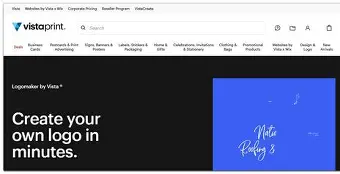
After testing for months, my honest finding is this: the AI does the heavy lifting of composition and color theory, but your own taste is what makes it work. Don't just settle for the first result. Push the tool, change the fonts, and look at the mockups. When you treat the AI as a collaborator rather than a replacement for your own vision, that’s when you get the best results. For my electronics business, the result was a logo that I’m still happy to see every morning when I open my shop door.