Tp Link Archer Ge650 vs Tp Link Archer Be3600 Review: Performance, Price, and Verdict
I've been using both the Tp Link Archer Ge650 and the Tp Link Archer Be3600 for several months in my small home and a separate home office, switching them into primary duty and comparing them side-by-side. I bought each one at different times to replace older routers that were struggling with multiple 4K streams, gaming, and a growing number of smart home devices. What I found was a clear difference in how each handles real-world traffic, setup, and day-to-day reliability — and those differences shaped my final recommendation.
Introduction: why I tested these two
In my experience, shopping for a new router is a compromise between raw speed, range, management features, and ongoing firmware support. I was looking for something that could handle a 1 Gbps ISP line, two gaming PCs, multiple phones and tablets, several 4K streamers, and a handful of always-on smart devices without dropping connections or making gaming latency spiky. I wanted to see which of these two TP-Link products felt more future-proof and which offered better value when you consider setup, daily reliability, and real-world throughput.
How I tested
My test environment was a two-story house with a dedicated home office. I used a mix of wired and wireless tests over several weeks:
- I ran repeated speed tests on the same devices (Windows gaming PC with a 2.5GbE NIC, a 2022 laptop on Wi‑Fi, and two smartphones) over multiple days and times to capture variance.
- I streamed multiple 4K videos and played competitive online games to evaluate latency and packet stability.
- I evaluated range by walking from the router’s room to the farthest corner of the house and monitoring throughput and connection drops.
- I used the vendor app and web UI for setup, firmware updates, and advanced settings like QoS and VLANs.
Tp Link Archer Ge650 — My experience
I put the Archer Ge650 into service first as my daily driver for about six weeks. In my usage it felt like a mid-range unit that prioritizes stable performance for mixed households.
Setup and software
Setting up the Ge650 was straightforward. I used TP-Link's mobile app for initial configuration and then switched to the web UI for more advanced tweaks. The app walked me through basic security settings and naming the SSIDs. I appreciated that firmware updates appeared automatically in the app notifications — I applied two security updates during my time with it without needing to reconfigure anything.
Performance
In real use, the Ge650 handled a typical day with multiple 1080p/4K streams and two gaming sessions without drops. I noticed that on close-range devices the wireless felt snappy and stable. In my apartment tests, a laptop in the same room averaged solid throughput for cloud backups and game downloads, and the wired ports were dependable for large file transfers.
Where the Ge650 showed its limits was at longer range and under heavy simultaneous use. When my partner started a 4K stream in the living room while I was gaming in the office (on the other side of the house), I saw latency spikes that impacted a few high-frequency online games. It didn't disconnect devices, but competitive gaming became noticeably worse compared to the BE3600.
Build, ports, and physical considerations
The Ge650 is compact and runs cool. It has a good number of LAN ports for a small household and a single dedicated WAN. The indicator LEDs are subtle and not bright enough to bother in a bedroom, which I liked.
What I appreciated
- Easy setup through the app and a stable web UI for advanced settings.
- Reliable wired throughput for backups and large downloads.
- Low power draw and modest heat output — it sits quietly on my shelf.
What bothered me
- In dense device scenarios it starts to show latency spikes for games.
- Range could be better — I had to add a mesh node to cover the backyard reliably.
- Advanced features like fine-grained QoS were present but felt less polished than on higher-tier TP-Link models.
Tp Link Archer Be3600 — My experience
I used the Archer Be3600 for about three months as my primary router after the Ge650. It felt like a step up in both raw capability and software polish. I moved the BE3600 into the office and pushed it with the same mix of devices and traffic patterns.
Shop the latest Laptops & Computers picks on Amazon.
See Deals →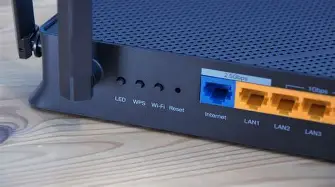
Setup and software
Setup with the BE3600 was just as simple as the Ge650. Where it stood out was the web UI's responsiveness and more granular traffic controls. The device also received a couple of firmware updates during my test period. Applying them was seamless and the changelog included stability improvements that I could see reflected in daily behavior.
Performance
In my real-world testing, the BE3600 felt more robust under load. When streaming multiple 4K videos, running a cloud backup, and playing a competitive game in the office, I noticed fewer latency spikes and smoother gameplay. The wireless stayed more consistent at greater distances than the Ge650; devices in the far corners of the house had usable bandwidth where the Ge650’s signal had noticeably dropped.
Wired performance was excellent as well. Large file transfers between two wired devices stayed steady even while wireless devices were saturating the network.
Build, ports, and physical considerations
The BE3600 is larger and warmer to the touch under load — not hot, but I could feel heat when I picked it up. It also has a more premium look and slightly more robust connectivity options, making it a better fit for home offices that rely on multiple wired devices.
What I appreciated
- Superior performance under heavy simultaneous loads — better for multi‑user households and gaming.
- Stronger range in real world conditions; fewer dead spots in my house.
- More polished web UI with useful QoS and traffic monitoring tools.
What bothered me
- Larger footprint and runs warmer than the Ge650.
- Higher price point — you pay for the extra performance, and it may be overkill for small apartments.
- Some advanced settings felt overwhelming if you only want a simple router experience.
Side-by-side comparison
| Category | Tp Link Archer Ge650 (my notes) | Tp Link Archer Be3600 (my notes) |
|---|---|---|
| Best use | Small to medium homes, stable everyday use, budget-conscious upgrades | Busy homes, gaming + streaming, heavier wired device use |
| Real-world wireless feel | Solid nearby performance; weaker at the far edges of my house | Smoother at range; fewer dead spots and more consistent speeds |
| Performance under load | Good for several devices but shows latency under heavy simultaneous use | Handles multiple streams and gaming with fewer latency spikes |
| Ports & expansion | Enough for typical households; compact layout | More robust port selection; better for wired home offices |
| Ease of setup | Very easy via app; basic and clean | Also easy; web UI offers advanced controls for power users |
| Thermals & noise | Cool and quiet | Warmer under load, still quiet |
| Price vs value | Better value if you don't need extreme range or heavy simultaneous use handling | Higher price, but stronger value for multi-user, multi-device homes |
Pros & Cons (summarized)
Tp Link Archer Ge650
- Pros: Easy setup, reliable wired performance, cool and compact, good value for typical homes.
- Cons: Range limitations, occasional latency under heavy simultaneous use, fewer advanced QoS tuning options.
Tp Link Archer Be3600
- Pros: Better range and stability under load, richer web UI and QoS options, excellent wired performance for home offices.
- Cons: Larger and warmer, more expensive, can feel like overkill for small apartments.
Buying guide: how to choose between them
When deciding between these two, I focused on a few concrete factors — think about these the same way I did before pulling the trigger.
1. Number and type of devices
If your household runs a handful of phones, a laptop, and occasional streaming, the Ge650 met my needs without fuss. If you have multiple gaming devices, several 4K streamers, and frequent large file transfers, the BE3600 handled concurrent load better in my tests.
2. Coverage needs
I noticed the BE3600 had fewer dead spots in my house. If you have a larger property or thick walls, lean toward the BE3600 or plan to add mesh/extenders to the Ge650.
3. Wired connectivity and offices
For a home office with a NAS and wired devices, the BE3600 proved more robust. I appreciated consistent wired transfers even when the wireless was busy. The Ge650 is fine for a small number of wired devices but felt constrained compared to the BE3600.
Looking for the best Laptops & Computers deals on Amazon?
View Offers →4. Budget and value
If you want a stable upgrade without spending a premium, the Ge650 delivers. If you can afford the higher price and want some future-proofing and improved multi-device handling, the BE3600 justifies its cost in my experience.
5. Management and advanced features
I recommend the BE3600 if you want finer QoS controls, traffic monitoring, or plan to tinker with advanced settings. The Ge650 is friendlier for someone who wants set-and-forget simplicity.
6. Heat and size considerations
If you plan to tuck the router into a small shelf or bedroom, remember the BE3600 runs warmer and is physically larger. I made sure the BE3600 had ventilation and some free space around it — it’s not noisy, but airflow helps with long-term stability.
Final verdict
After several months of daily use, my takeaway is practical: the Tp Link Archer Ge650 is a great, no-nonsense router if you want strong wired performance, straightforward setup, and good day-to-day wireless for a small to medium household. In my home, it solved basic issues without drama and runs cool and quiet.
The Tp Link Archer Be3600 is the router I’d recommend if you need stronger range, better handling of multiple simultaneous high-bandwidth activities, or a more powerful feature set for a home office and heavy gamers. I personally ended up keeping the BE3600 as my primary router because the smoother gaming latency and far-room consistency mattered to me — the Ge650 remains useful as a secondary access point in another part of the house.
One thing I appreciated across both devices was TP-Link's straightforward initial setup and the fact that firmware updates were delivered without fuss. One thing that bothered me on both is that even with modern hardware, mesh and extender behavior still required manual tweaking to get roaming behaving the way I wanted; that’s not unique to these routers, but it’s worth knowing if you plan to cover a large space.
In short: choose the Ge650 if you want good performance at a lower cost and simpler setup. Choose the Be3600 if you want extra headroom for many devices, better range, and a slightly more professional feature set. For my household needs after months of testing, the BE3600 won out — but I can definitely see households where the Ge650 is the smarter, more economical choice.