Samsung Qn90F vs Antennas Direct Goliath Tv Antenna: Which Should You Buy?
I've spent the last several months living with both a Samsung QN90F TV and an Antennas Direct Goliath TV antenna—one mounted on my roof and the other sitting in my living room as the main display. I bought the TV and the antenna separately because I wanted the best possible picture from over-the-air (OTA) broadcasts without paying for cable. What I found was a mix of wow moments, small frustrations, and practical trade-offs that matter depending on how you watch TV. This article is my hands-on, honest comparison to help you decide which investment fits your needs.
Why I bought both
My main goal was simple: get the cleanest, sharpest picture possible from free broadcast channels (local news, sports, and a handful of network shows) and have a modern smart TV experience for streaming. The QN90F appealed because it promised high brightness and contrast (important for HDR and bright-room viewing), while the Goliath promised to pull in distant stations that cheaper antennas couldn't. After months of use I can speak to how they perform together and separately.
Detailed product reviews and analysis
Samsung QN90F — my experience
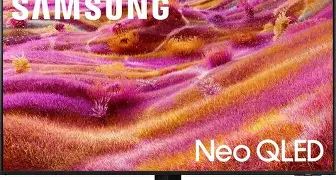
I've been using the QN90F as my main TV for everyday viewing and gaming. Immediately after set up I appreciated how punchy the image looked—HDR scenes have a spark that makes highlights pop, and daytime sports feel vivid even with sunlight coming through my living room windows. In practice, the display does very well in bright rooms: reflections are reduced compared with older glossy panels, and peak brightness helps preserve highlight detail in HDR material.
That said, nothing is perfect. One thing I noticed was blooming around very bright objects on dark backgrounds: local dimming does an impressive job overall, but on close inspection bright stadium lights or highlights around white text can have a soft halo. I also found Samsung's motion smoothing enabled by default; I dislike the "soap opera" effect so I turned it off. After calibration tweaks—switching to Filmmaker Mode for movies and enabling Game Mode for consoles—the QN90F settled into the kind of balanced picture I was hoping for.
Smart features are solid. Tizen OS boots quickly, app selection is broad, and navigation is responsive. But I ran into two annoyances: the remote's voice and ambient controls occasionally felt more intrusive than helpful (I prefer to keep a minimal set of features active), and the TV's built-in speakers are serviceable but thin for movie sound. I ended up pairing a compact soundbar which made a big difference.
For gaming, I noticed input lag is impressively low in Game Mode—enough that competitive play feels snappy. The high-contrast highlights and the TV's tone mapping make HDR-enabled games look particularly striking. However, if you're a very picky calibrator, you might want to spend time in the picture settings to tame oversaturated colors in some modes.
Antennas Direct Goliath TV Antenna — my experience
I installed the Antennas Direct Goliath on a mast above my roofline and fed it into the QN90F's tuner. The first thing I appreciated was its reach: channels that used to be noisy or missing with a small indoor antenna were now stable and watchable. I live roughly 35–45 miles from the nearest major transmitter clusters in uneven terrain; the Goliath gave me reliable reception on many UHF channels and even a few VHF stations that other antennas missed.
Looking for the best TVs & Home Theater deals on Amazon?
View Offers →Installation was not trivial. The antenna is large and fairly heavy; mounting requires a sturdy mast and some basic rooftop experience (or a professional). I also had to run RG6 coax through my attic and install a grounding block to meet local codes. After that, aligning the antenna took patience—small direction changes made a noticeable difference, and I used the TV's signal meter to fine-tune position.
In use, reception is excellent on clear days. What I found was that multipath reflections and weather can still affect some channels—rainy evenings brought a couple of pixelation dropouts on fringe stations—but overall stability was much better than the indoor options I'd tried. I also paired the antenna with a powered preamp when I added a long coax run; that combination reduced noise on weaker channels.
One thing that bothered me was wind noise and the occasional need to re-tighten the mounting hardware after a particularly stormy season. The antenna's build feels robust, but it is an outdoor appliance and needs occasional checks.
Pros & Cons
Samsung QN90F
- Pros: Bright, punchy HDR highlights; excellent contrast for a non-OLED screen; low input lag in Game Mode; responsive smart platform with lots of apps.
- Cons: Local dimming blooming in high-contrast scenes; built-in sound is unimpressive for movies; some default picture processing choices (motion smoothing) require manual disabling.
Antennas Direct Goliath TV Antenna
- Pros: Very good range and signal stability for UHF/VHF broadcasts; robust construction; pulls in distant channels that indoor antennas miss.
- Cons: Large and heavy — needs a sturdy mount and possibly a pro to install; susceptible to weather and multipath interference in fringe areas; occasional maintenance required.
Comparison table
| Category | Samsung QN90F | Antennas Direct Goliath TV Antenna |
|---|---|---|
| Primary purpose | High-end Neo QLED smart TV for HDR, movies, and gaming | Outdoor directional antenna for receiving OTA broadcast TV |
| Picture / Signal quality | Excellent brightness & contrast; minor blooming | Excellent reception for distant stations; weather-dependent |
| Setup difficulty | Plug-and-play, plus calibration for best results | Moderate to advanced (roof mast, grounding, alignment) |
| Maintenance | Low (firmware updates occasionally) | Medium (mount checks, potential amplifier maintenance) |
| Smart features | Full smart TV platform (apps, streaming) | None (feeds into TV tuner) |
| Best for | Viewers wanting great HDR and smart features | Cord-cutters needing strong OTA reception and range |
| Price / Value | Premium TV price — high value if you prioritize picture | Good value as a one-time purchase for reliable OTA |
How they work together
In my setup the QN90F was the display and the Goliath was the signal source for OTA channels. The QN90F's tuner is competent—menu-driven channel scans picked up the stations the antenna provided with minimal fuss. When I watched live sports broadcast over OTA, the combination was satisfying: the Goliath supplied a clean feed and the QN90F rendered motion and highlights very well. Where I saw weaknesses was when a station's signal dipped: the TV sometimes displayed macroblocking until the signal recovered. Adding a preamp and checking coax terminations mitigated that in most cases.
Buying guide — what to consider before you buy
Deciding between investing in a premium TV like the QN90F or spending on an antenna like the Goliath isn't an either/or choice—many people end up buying both—but if you must prioritize, consider the following questions. I walked through these when making my purchases and they helped me avoid buyer's remorse.
1. How do you watch most TV?
- If you primarily stream Netflix, Disney+, or YouTube, prioritize TV features (panel quality, smart apps, low input lag).
- If you mostly watch local news, live sports, and network programming via OTA, a better antenna will dramatically improve reception quality and reduce dependence on paid services.
2. How far are you from broadcast towers?
- Use an online coverage map to estimate distance and expected signal strength. For fringe reception (30+ miles or with terrain obstructions) I found the Goliath worth the extra effort.
- If you're in a dense urban area with towers nearby, a small indoor antenna might suffice—no rooftop work required.
3. How comfortable are you with installation?
- Indoor antennas are easy; rooftop antennas like the Goliath need a mast, grounding, and coax runs. Factor in installation cost if you won't DIY.
- For the TV, plan for calibration time—otherwise the default picture settings may exaggerate color or motion processing.
4. Room brightness and viewing habits
- If you watch during the day or have wide windows, the QN90F's brightness and anti-reflective treatments will give a better image than many OLEDs in such environments.
- If your viewing is mostly at night in a dark room, consider that even though the QN90F has excellent contrast, some viewers prefer OLED's absolute blacks for cinema nights.
5. Sound and accessories
- Both setups benefit from a soundbar or dedicated speakers—built-in TV audio rarely satisfies for movies. I invested in a compact soundbar and never looked back.
- For the antenna, budget for high-quality RG6 coax, grounding blocks, and possibly a preamp if the run is long.
6. Future-proofing and ports
- Check the TV's HDMI and eARC support if you'll attach game consoles and AV receivers—this matters more if you use the TV as a home theater centerpiece.
- For the antenna, ensure your TV's tuner supports ATSC signals (most modern TVs do) and consider an external ATSC 3.0 tuner if you want newer features down the road (coverage permitting).
Practical tips from my setup
- Always run a channel scan on the TV after adjusting antenna direction; small changes yield big results.
- Use a short coax jumper between antenna and preamp when possible to reduce signal loss; long runs benefit from RG6 and a powered amplifier.
- For the QN90F, switch to Filmmaker Mode for movies and turn off motion processing; keep Game Mode for consoles to reduce input lag.
- Keep firmware updated on the TV—Samsung's updates fixed a couple of app launch hiccups I experienced in month one.
Who should buy which?
In my experience, the two purchases serve different needs. If you want a premium picture and smart features and watch both streaming and live content in a bright room, the QN90F is an excellent foundation. I was consistently impressed by its HDR highlights and responsiveness for gaming.
Shop the latest TVs & Home Theater picks on Amazon.
View Offers →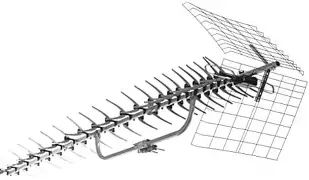
If you're primarily trying to get better OTA reception—especially from distant or marginal stations—the Goliath is a meaningful upgrade over indoor antennas. The setup cost and install time are real, but the signal improvement was worth it for me.
If I had to recommend one to different kinds of viewers: buy the Goliath if your priority is reliable OTA channels and you have the option to mount an outdoor antenna. Buy the QN90F if you want a best-in-class bright-room TV with modern smart features and you plan to stream or play games a lot. If you can budget for both, they complement each other very well.
Final thoughts
After months of living with both, here's the short version from my perspective: the Samsung QN90F delivered the refined, bright, and responsive picture I expected, with only minor quirks like local dimming halos and finicky default processing settings. The Antennas Direct Goliath delivered significantly improved OTA reliability—especially for channels that were unreliable with smaller antennas—but demands a proper installation and occasional maintenance.
What surprised me most was how much the antenna changed my viewing habits: I found myself watching live local programming and sports more often because the quality was suddenly good enough to prefer over streaming some on-demand content. One thing that bothered me was the amount of setup fuss—running cable and climbing onto the roof is not for everyone. But once it was done, the combo of clean OTA feed into the QN90F's strong picture processing made for a very satisfying TV experience.
If you're choosing between the two, think about what matters most to you right now—picture and smart features or reliable live local channels—and use the buying guide above to match the purchase to your needs. For me, both purchases were justified; together they made my living-room TV setup far better than I expected when I started this little experiment.