Blackshark V2 Pro Wireless 2020 Review: Real User Experience After 3 Months
Category: Audio
Introduction
I've been using the Blackshark V2 Pro Wireless (2020) daily for about three months now — mostly for PC gaming, a handful of console sessions, and a fair amount of Discord calls and Zoom meetings. I bought it intending to have a premium wireless gaming headset that could handle competitive FPS, long sessions without fatigue, and a microphone that wouldn't force me to pirate a dedicated USB mic. What I found was a mix of clear strengths and a few real-world annoyances that only surfaced after living with the headset for weeks.
This review is my honest, hands-on account: what I liked, what disappointed me, where it shines, and where you might want to look elsewhere. I’ll cover fit and comfort, build quality, audio performance, microphone performance, wireless stability and battery life, software, and day-to-day usability. I’ll also include a short comparison table against similar headsets, a concise pros & cons list, and a buying guide to help you decide whether this is the headset for you.
What I tested and my usage pattern
Over the past three months I used the Blackshark V2 Pro Wireless for roughly 5–8 hours on most weekdays and longer sessions on weekends. That includes:
- Competitive multiplayer shooters (CS:GO, Valorant, Apex Legends)
- Single-player story games with cinematic sound (Control, Cyberpunk 2077)
- Casual console gaming on PS5 (using USB dongle when appropriate)
- Daily voice chats, two to three Zoom meetings per week, and streaming/recording tests
Unboxing and first impressions
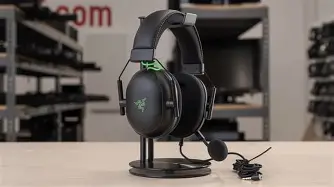
Out of the box, the headset looks like a purposeful, esports-oriented product: matte finishes, a low-profile aesthetic, and a detachable boom mic. The headset felt lighter than I expected given the size of the ear cups — that translated to noticeable comfort on long sessions. The materials are mostly plastic, but they don’t feel cheap; seams are tight and joints are solid. The ear cushions are memory-foam style with a breathable fabric covering, which helped avoid the heating issues I sometimes get with synthetic leather during multi-hour sessions.
Fit and comfort (my day-to-day experience)
Comfort is where the Blackshark V2 Pro largely shines for me. The clamping force felt snug but not painful; I could wear it for five hours straight without significant pressure points. The ear cups are deep enough that my ears didn’t press into the drivers, which is important for comfort and preserving sound quality. The breathable fabric on the pads meant my ears stayed relatively cool.
That said, the headset is fairly large. If you have a smaller head or prefer a very low clamping force, try it in person first. Also, the headband padding is minimal — it's sufficient, but if you’re looking for plush cushioning on the top of your head, this isn’t the plushest design out there.
Build quality and design observations
The Blackshark V2 Pro is built to be light and practical rather than luxurious. The visible parts are plastic, but the headband has internal reinforcement that gives a reassuring stiffness. After three months of daily handling, I haven’t noticed any bending, creaking, or loosening of components.
I appreciate the detachable microphone. It’s easy to snap on and off and stays secure during use. The USB wireless dongle is small and unobtrusive, though you’ll want to keep it in a safe spot if you’re using a laptop since small dongles are easy to lose.
Audio performance — what I heard
For gaming, the Blackshark V2 Pro is excellent. Footsteps are clear and well separated; I could reliably tell left-right and front-back cues in competitive shooters, which is the whole point of a gaming headset for me. The soundstage is surprisingly open for a closed-back headset — not as wide as some open circumaural headphones, but wider and more precise than many gaming headsets in this price range.
Looking for the best Audio & Headphones deals on Amazon?
View Offers →The driver tuning favors clarity and attack: mids and highs are forward, so gunshots, vocal lines, and high-frequency details are crisp. Bass is present and controlled, which makes explosions feel punchy without muddling positional cues. I did notice that some music tracks with very heavy sub-bass sounded a bit restrained compared to full-range audiophile headphones — but for mixed usage (gaming + voice + music) I found the balance quite good.
When I switched to THX Spatial Audio (which requires software), the positional cues gained even more definition in supported games. Spatial audio helped with immersion during single-player titles and made competitive calls slightly easier to parse spatially. If you’re using the headset without the companion software or on a platform where THX isn’t supported, you still get very capable stereo imaging.
Microphone — real-world voice quality
The detachable boom mic is one of the most important aspects for me because I use voice chat constantly. In my experience, the mic is solid for in-game chat, streaming, and conference calls. When I speak into it from the normal position, voice clarity is good and background noise is reduced by the mic’s cardioid pattern.
That said, the microphone can sound a little “tubby” and distant if you don’t position it close enough to your mouth. I had to make a small habit change: bring the mic within an inch of my mouth and angle it slightly away from my teeth to avoid plosives. With that setup, teammates consistently said I sounded clearer than usual headsets I’ve owned.
For podcast-level or studio recording, no — it won’t replace a dedicated condenser mic. But for streaming, Discord, and Zoom, I was satisfied. I also occasionally used the headset’s mic for quick clips and found post-processing in OBS or simple compression/eq made it more than acceptable.
Wireless performance & battery life
The 2.4 GHz wireless connection was stable for me. I used the headset with my PC and occasionally with my PS5 via the USB dongle. In typical home-office/gaming-room setups I didn’t experience dropouts while I sat within a reasonable range (10–12 feet with a couple of walls). I did notice brief interference in a crowded apartment with multiple Wi‑Fi devices, but moving the dongle to a small USB extension in front of the PC cured that.
Battery life in my usage averaged around 18–22 hours per charge. The manufacturer’s claim is often higher, and indeed if you use the headset conservatively (lower volumes, no lighting or software extras) you may hit the upper range. In my daily workflow of gaming and voice calls at moderate volumes, I typically recharged every two to three days. Charging is straightforward via the included cable.
Software and customization
To unlock THX Spatial and the EQ presets, you need the companion software. In my experience, the software provides useful EQ presets and a spatial audio toggle that materially improves immersion in certain games. However, the software can be a little finicky on initial setup — it required one reinstall during my first week because the headset didn’t show as connected until I restarted the app. Once configured, it behaved reliably.
If you prefer a plug-and-play experience without software, you still get great raw audio and mic performance out of the headset, but you’ll miss out on the additional spatial and EQ customization options.
Looking for the best Audio & Headphones deals on Amazon?
View Offers →Day-to-day usability and practical points
Some practical things I learned:
- Keep the dongle safe. It’s small and easy to misplace.
- If you move around a lot in the room, consider a USB extension to keep the dongle unobstructed for best range.
- The detachable mic makes the headset more versatile for travel and non-gaming use.
- If you’re sensitive to bright treble, try a mild EQ adjustment — the default tuning is bright-forward by design.
Pros & Cons
- Pros:
- Excellent positional audio for competitive gaming
- Comfortable for multi-hour sessions; breathable ear pads
- Lightweight build with solid everyday durability
- Detachable boom mic with good clarity for voice chat
- Stable 2.4 GHz wireless with minimal latency
- Software-enabled THX Spatial option improves immersion
- Cons:
- Mostly plastic construction — feels less premium than some rivals
- Mic can sound distant unless positioned correctly
- Software is useful but occasionally finicky to set up
- No multi-device Bluetooth — limited to USB wireless (and wired via cable)
- Battery life is good but not class-leading
Comparison table — how it stacks up
| Model | Wireless | Battery (typical) | Mic Quality | Comfort | Best for |
|---|---|---|---|---|---|
| Blackshark V2 Pro Wireless (2020) | 2.4 GHz USB dongle | ~18–24 hours | Good (detachable boom) | Very comfortable (memory-foam pads) | Competitive gaming, long sessions |
| SteelSeries Arctis 7 (reference) | 2.4 GHz USB dongle | ~20+ hours | Good (retractable boom) | Excellent (suspension band) | Comfort-first wireless gaming |
| HyperX Cloud II Wireless (reference) | 2.4 GHz USB dongle | ~30+ hours | Good (detachable) | Comfortable (thicker pads) | Long battery life, comfort |
Who should buy the Blackshark V2 Pro Wireless?
In my experience, the Blackshark V2 Pro Wireless is a strong pick if you’re primarily a PC gamer who values precise positional audio and wants a comfortable headset for long sessions. If you play competitive shooters and need reliable wireless performance with solid mic clarity, it performs very well.
If you’re someone who prioritizes absolute microphone fidelity (podcasting/voiceover), wants a metal-heavy premium aesthetic, or needs multi-device Bluetooth switching, this might not be the best fit. Likewise, if you want the longest possible battery, there are options that exceed this headset’s endurance.
Buying guide — what to look for
When shopping for a wireless gaming headset, here are the practical points I used to evaluate the Blackshark V2 Pro and that I recommend you consider:
- Wireless type: A 2.4 GHz USB dongle generally offers the lowest latency for gaming, but check console compatibility if you want to use it on multiple platforms.
- Microphone needs: Decide whether the built-in mic will be your daily driver. If you stream or record professionally, consider a dedicated USB/XLR mic instead.
- Comfort for long sessions: Look for deep ear cups and breathable padding — memory foam with fabric covers tends to stay cooler than leatherette.
- Software features: Spatial audio and EQ can make a big difference in-game; verify whether the companion software is available for your OS and how stable it is.
- Build and portability: If you travel, detachable mics and a compact dongle are useful. Consider whether you want a metal frame for longevity vs. light plastic for comfort.
- Battery life: Think about how often you’re willing to charge. Battery claims are optimistic; expect somewhat less in real use.
- Alternatives: Try to compare to products in the same class (other 2.4 GHz wireless headsets) so you can weigh comfort vs. sound vs. battery trade-offs.
Real-world tips from my use
- If you get interference or range issues, try a short USB extension and place the dongle in front of your PC rather than behind it.
- For clearer mic sound, keep the boom within 1–2 cm of your mouth and slightly off-axis to reduce plosives.
- Use the software’s EQ to tame overly bright highs or to add sub-bass for music if you prefer a warmer sound profile.
- Charge the headset overnight every few days rather than letting it drain completely; battery longevity seems better with shallower cycles.
Conclusion
After three months with the Blackshark V2 Pro Wireless (2020), I can say it’s a highly capable gaming headset that struck a practical balance between comfort, sound quality, and wireless stability. What I appreciated most was the headset’s positional clarity and the comfort that let me game for long stretches without fuss. The detachable mic worked well for daily voice chats and streaming with modest post-processing.
What bothered me were small but real things: the mostly-plastic construction (it’s light and comfortable but not luxurious), the need to babysit the software during initial setup, and the microphone’s sensitivity to positioning. None of these are dealbreakers for me, but they’re worth noting if you expect perfection out of the box.
In my experience, if you want a competitive-focused, comfortable wireless headset that performs reliably across gaming, chat, and casual media, the Blackshark V2 Pro Wireless delivers consistent, practical performance. If you need the absolute best mic for recording or the most premium materials, you might want to look at specialized alternatives. For balanced, everyday gaming use, this headset has been one of the most dependable companions on my desk over the last three months.